
Ross Atkins says the #BlueJays will continue to look at ways to improve the team. He adds that additions now would (obviously) cut into playing time of some established big-leaguers, but adds: “We’ve always had incredible support from ownership.”

What signing Bichette or Tucker could mean for Blue Jays’ position-player group
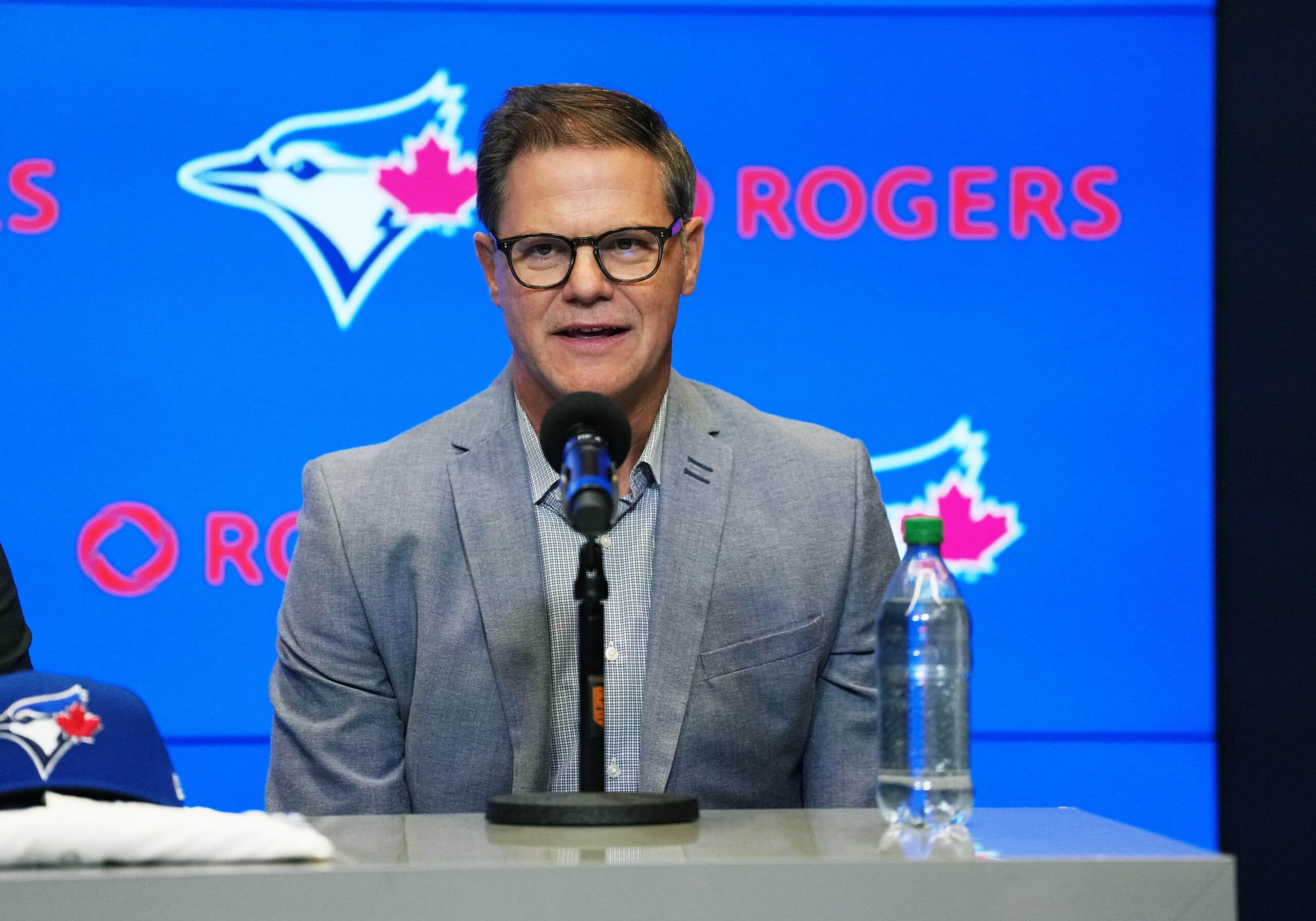
Photo credit: Nick Turchiaro-Imagn Images

By Thomas Hall
Jan 7, 2026, 13:00 ESTUpdated: Jan 7, 2026, 13:10 EST
Addition may also mean subtraction if the Toronto Blue Jays continue adding to next season’s position-player group.
As long as Bo Bichette and Kyle Tucker remain unsigned, this franchise will continue exploring ways to improve even after signing Kazuma Okamoto, as general manager Ross Atkins stated during the Japanese slugger’s introductory press conference on Tuesday. Financially speaking, signing either player would almost certainly be considered a special exception, meaning the front office could spend beyond its budgetary restrictions to make another massive splash.
Having said that, this isn’t about simply filling holes anymore. It’s about augmenting what they already have. Thus, any further additions will start to push familiar faces to the background, or even out of the equation entirely.
The harsh reality is there won’t be sufficient room for everyone if the Blue Jays’ brass continues to push forward in free agency, which is what most of the industry expects them to do. And if they remain on this path, it could necessitate a subtraction or two from a returning cast that lifted this organization to its first World Series appearances in 32 years last fall.
Alternatively, there’s also a potential scenario where the prices on Bichette and Tucker remain beyond the valuations that management deems comfortable or other markets become more aggressive, causing them to stand pat with the current position-player group. But that’d be an acceptable conclusion to this off-season, too, given the significant improvements already made.
This roster is talented enough as is to defend the franchise’s American League crown next season. Plus, with Okamoto — a six-time NPB All-Star and 30-home-run hitter — now in the fold, they no longer possess the same desperation for offensive upgrades as many rival clubs do. So, it’s conceivable that they could be finished adding this winter.
In this multi-million-dollar game of chicken, though, anything is possible.
After signing Okamoto, who’s expected to primarily occupy third base in 2026, it’d be easier to accommodate an outfielder like Tucker than it would be with a middle infielder such as Bichette. However, neither scenario should be ruled out at this point.
In either case, signing one or the other will eat into playing time for multiple Blue Jays hitters, although which players that’ll include will depend on the pathway chosen.
If the Jays re-sign Bo Bichette…
It’d likely have the biggest impact on Ernie Clement, who’d shift from an everyday second baseman to a utility player off the bench. There could be opportunities for him against left-handed pitching, which he hit .326 against with a 146 wRC+ last season, if Andrés Giménez moved to the bench in those situations.
For the most part, though, Clement’s role would be a reserve.
Bichette’s return would also eliminate any chance of Davis Schneider earning reps versus right-handed pitching next season, with him and Giménez positioned up the middle, Okamoto at third and Santander and Addison Barger occupying the outfield corners. While there’s a chance Schneider could crack the lineup against lefties, Barger’s emergence as a full-time player might cut into those opportunities.
As for how the Blue Jays would create roster space for Bichette, it’d probably come at the expense of Schneider or, in all likelihood, Nathan Lukes. The latter has already had his role greatly reduced following Okamoto’s arrival, pushing Barger into more of an outfield role, which, in turn, has nudged Lukes out of a starting job.
Since Toronto’s bench includes Myles Straw, who’s better suited to serve as a fourth outfielder due to his elite defence and previous history, there isn’t necessarily a fit for a left-handed outfielder in that group, especially with Schneider’s versatility also in the mix.
In this scenario, Lukes’ only pathway to playing time would be versus right-handed pitching, requiring Barger to move to third base (either in a platoon with Okamoto or during the days he shifts to first, with Vladimir Guerrero Jr. resting or playing DH), creating room in the outfield alongside Santander and Daulton Varsho.
Both Schneider (two) and Lukes (one) have minor-league options remaining, so they could stay with the organization even if Bichette re-signs. Considering neither is arbitration-eligible yet — Schneider has four seasons of club control left, Lukes has five — perhaps it’d also be worth exploring a trade to improve other areas of the roster, like the bullpen.
If the Jays sign Kyle Tucker…
The ’26 outfield trio would largely be set in tone between Santander, Varsho and Tucker from left to right, with George Springer occasionally rotating in during Santander’s DH/rest days.
Notice Barger’s omission from that group? That’s because his role would be left in limbo upon Tucker’s arrival, likely bumping him to a utility role. Creating consistent playing time would be tricky with Okamoto occupying the hot corner. But perhaps if he struggles in right-on-right matchups, it could open the door for a platoon timeshare involving Barger.
Or maybe the Blue Jays would consider experimenting with Barger at second base, where he hasn’t played since 2023 and owns less than 400 career innings of experience — all in the minors. It wouldn’t be an ideal configuration, especially considering the emphasis this organization has put on run prevention. It would, however, allow them to insert another left-handed, middle-of-the-order presence into the lineup versus right-handed pitching.
Signing Tucker, a left-handed-hitting outfielder, would completely push Lukes (also left-handed) out of the picture, though, blocking the latter’s pathway to the majors and likely numbering his days with the organization. It’d also restrict Schneider to infield duties, forcing him to compete for at-bats with Clement — and possibly Barger — at second.
Some of you are probably saying, “Well, why don’t they trade Santander to solve this outfield logjam?” And maybe they would. But considering he’s only entering Year 2 of his five-year, $92.5 million contract, the team would have to retain a significant amount of that deal to facilitate any trade, reducing the odds of him being dealt.
Perhaps that could change next winter if Santander enjoys a return-to-form offensive performance that helps improve his trade stock. In the meantime, the combination of Santander-Varsho-Tucker would become Toronto’s go-to outfield trio in ’26.
Recent articles from Thomas Hall
Breaking News
- Remembering the 2025 World Series, the best World Series of the 21st century
- Flashback Friday: Looking at Joe Carter’s walk-off home run 33 years ago
- Ernie Clement’s 2026 season was a tale of two halves
- Blue Jays free agent target: Adrian Morejon
- Louis Varland named to The Sporting News American League All-Star Team