
Why the overreliance on role players killed the 2026 Blue Jays
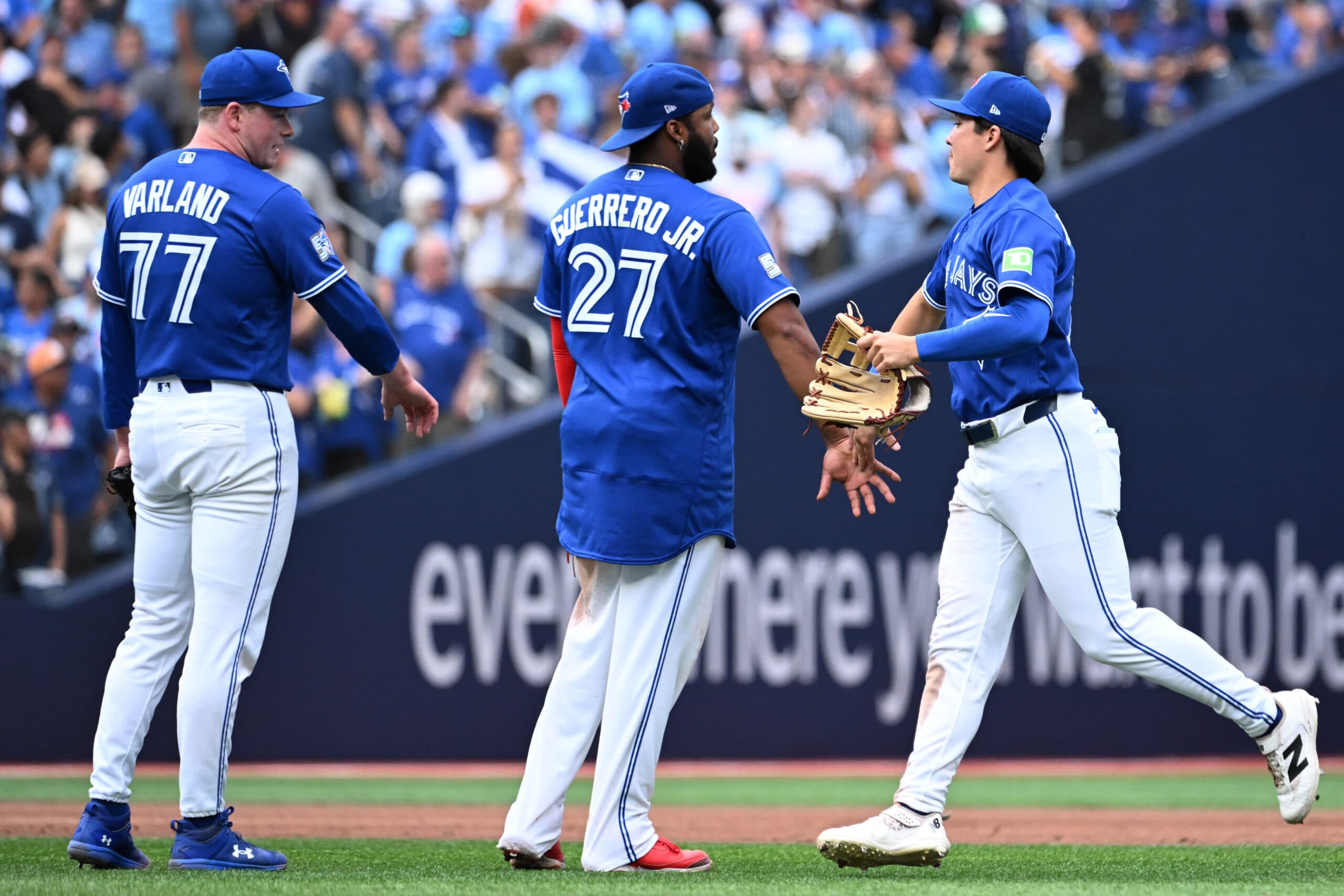
Photo credit: Dan Hamilton-Imagn Images

Sep 20, 2026, 07:00 EDTUpdated: Sep 20, 2026, 13:57 EDT
Everything that could go wrong went wrong for the 2026 Toronto Blue Jays. This wasn’t how their story was supposed to unfold as the successors of the improbable 2025 Blue Jays.
Mounting injuries were a big factor that inevitably doomed this iteration of the Blue Jays, but that only exposed the deep issue that persisted in Toronto’s system: the lack of strong depth pieces.
Without good depth players the Blue Jays could reach for, they had to rely more on their role players to get the job done for the vast majority of this season. That choice is clearly showing its limits now as the Blue Jays struggle to keep up with the playoff race.
The Blue Jays are technically only two games behind the last AL Wild Card spot still, but if they completely fall out of the race, here’s an examination of why the Blue Jays’ dependence on their role players killed their playoff hopes.
Overextended bullpen
The bullpen usage, perhaps, has been the most visible issue the 2026 Blue Jays have had all season long. The problem stemmed from the decimation of the starting rotation and the subsequent lack of quality starts. Compared to the Los Angeles Dodgers, who rank first in quality starts (79), the Blue Jays rank only 21st with 45 starts. That’s a whopping 34-start difference.
This then forced the Blue Jays’ bullpen to extend their outings. This season alone, Braydon Fisher already pitched 74 innings; Mason Fluharty pitched 60 innings; Tyler Rogers pitched 67.2 innings; Louis Varland pitched 76 innings. Everyone except Rogers pitched far more innings than they pitched last season.
These four relievers have pitched well despite the dramatic increase in their workload. But because they weren’t able to absorb all the remaining innings the starting pitchers couldn’t take on, that translated into the Blue Jays experimenting with other risky relievers this year.
That led to the Blue Jays giving chances to pitchers like Michael Lorenzen, Joe Mantiply, and Paul Sewald. That experiment hasn’t panned out well since these relievers have been more volatile in each outing. They, too, have pitched more innings than their total from last season, with the exception of Lorenzen, who used to be a starter.
Such is the vicious circle the 2026 Blue Jays had to endure because their starting rotation couldn’t provide enough innings, either due to injury or ineffectiveness. The weight the bullpen had to bear this season was heavy, and the Blue Jays paid a steep price.
Mismatched expectations for bench players
The effect of the Blue Jays’ injuries extended to the position player core this year. The prolonged absence of Addison Barger, Nathan Lukes and Anthony Santander forced the Blue Jays’ bench players to fill the everyday roles.
The prime example of this is Myles Straw. Originally, Straw’s main role was a defensive replacement and a pinch runner up until last season. That changed quickly as the Blue Jays lost players to injuries early this season. Straw then turned into an everyday outfielder who had to be prepared to play in any part of the outfield.
That also meant Straw’s bat became more critical in the Blue Jays’ lineup. The inherent problem with the 31-year-old taking this responsibility was that the expectations didn’t match his profile. The veteran outfielder has a career slash line of .245/.314/.319 and only hit four home runs at his peak. He has performed well above his standard this season with more playing time, but expecting the fourth outfielder to produce enough to help carry the team to the playoffs would be unrealistic.
Like Straw, there are many players who were forced to live up to mismatched expectations, especially in the outfield. The Blue Jays’ outfield defence suffered from deploying Yohendrick Piñango and Jesús Sánchez more often. Even Davis Schneider and Straw looked shaky at times when they were playing in left field.
Then there was an onslaught of players the Blue Jays gave playing time to as they sought to fill the gap left by injured players. Daz Cameron, Jonatan Clase, Rudy Martin Jr., Charles McAdoo, Eloy Jiménez, Sean Keys, Piñango, Lenyn Sosa and Luis Urías all got their shots to become potential regulars on the Blue Jays’ roster, but only a handful played well enough both defensively and offensively to stay with the Blue Jays long term. These players shouldn’t have had the duty to propel Toronto’s offence, but as the core players in the lineup continued to slump, their lack of production only became more prominent.
Bench players aren’t meant to become stars out of nowhere. Even if there is a chance, they are only supposed to play late-inning or part-time roles without having to shoulder the burden of holding up the team.
In the 2026 Blue Jays’ case, they had no choice but to rely more regularly on these bench players as their depth thinned out with a series of injuries. This conveniently leads to the next point.
The decline of the stars on the roster
Without a shadow of a doubt, the real culprit for the Blue Jays’ mediocrity is the major production decline among their star players. That means both hitters and pitchers.
Last season, the Blue Jays could get to the World Series because star hitters, like Bo Bichette, Ernie Clement, Vladimir Guerrero Jr., Alejandro Kirk, George Springer and Daulton Varsho, all played out of their minds and produced meaningful hits at the right time. Even their pitching was on point, despite having some home run concerns. Starters like Chris Bassitt, José Berríos, Kevin Gausman, Shane Bieber, Eric Lauer and Max Scherzer pitched consistently and stabilized the rotation. Rookie Trey Yesavage also shined much later in the year and in the playoffs.
Turns out, that level of stability was something that couldn’t be replicated so easily. Clement, Guerrero Jr., Kirk and Springer haven’t been as effective as last year with their bats; their wins above replacement are nowhere near their 2025 season, according to Chris Black from Sportsnet. The Blue Jays’ new third baseman Kazuma Okamoto is thriving in his first year as an MLB player, but his bat alone hasn’t been enough to revive the entire Blue Jays’ offence. Losing someone like Bichette has certainly hurt the offensive production, even if he himself is slumping with the New York Mets this year.
When star hitters can’t score runs, that puts bench players and pitchers more in the spotlight. Strong relievers like Fisher, Fluharty, Rogers and Varland can have put up good numbers for the Blue Jays, but when the offence can’t score, their pitching failure becomes magnified. That same logic applies to bench players’ offensive production. Someone like McAdoo just can’t become the next George Springer, but if Springer himself and other stars can’t offer meaningful offence, then McAdoo’s at-bats garner more attention than they should.
The situation on the pitching side has been dire as well for the 2026 Blue Jays. Before getting traded to the Chicago Cubs, Gausman already showed more signs of unreliability as he continued to give up more runs and recorded a 4.55 ERA so far this season. Scherzer has been on and off the injured list and has become much more volatile with a 4.33 ERA. Then there’s also Shane Bieber, who also hasn’t been nearly as effective as he was last year, and he’s back on the injured list.
It’s impossible to talk about the 2026 Blue Jays’ pitching without mentioning injuries because that’s what depleted the rotation in the first place. Losing Cody Ponce was just the beginning of the misfortune, as the injury bug eventually got to Bieber, Scherzer and even Yesavage. These injuries, coupled with declining starters and the team’s inability to score, ultimately impacted the Blue Jays’ playoff odds.
If and when the Blue Jays miss the playoffs this season, we’ll point to the great decline in both star pitchers and hitters as the biggest reason they failed in the end. That’s why last year’s missed opportunities hurt even more.
Sponsored by bet365
Breaking News
- Pending free agent Taylor Rogers expresses interest in reuniting with twin Tyler in Toronto
- 8 Blue Jays projected for arbitration raises this winter
- Blue Jays prospect Jake Bloss discusses returning to play in Arizona Fall League
- Examining the best fits for the Blue Jays’ outfield and second base needs
- Brett Bateman discusses his first big-league hit ‘just trying to get the barrel on the ball’