
One of the most beautiful home run shots you’ll ever see 🤩 #WANTITALL
3 lessons the Blue Jays should learn from the Philadelphia Phillies
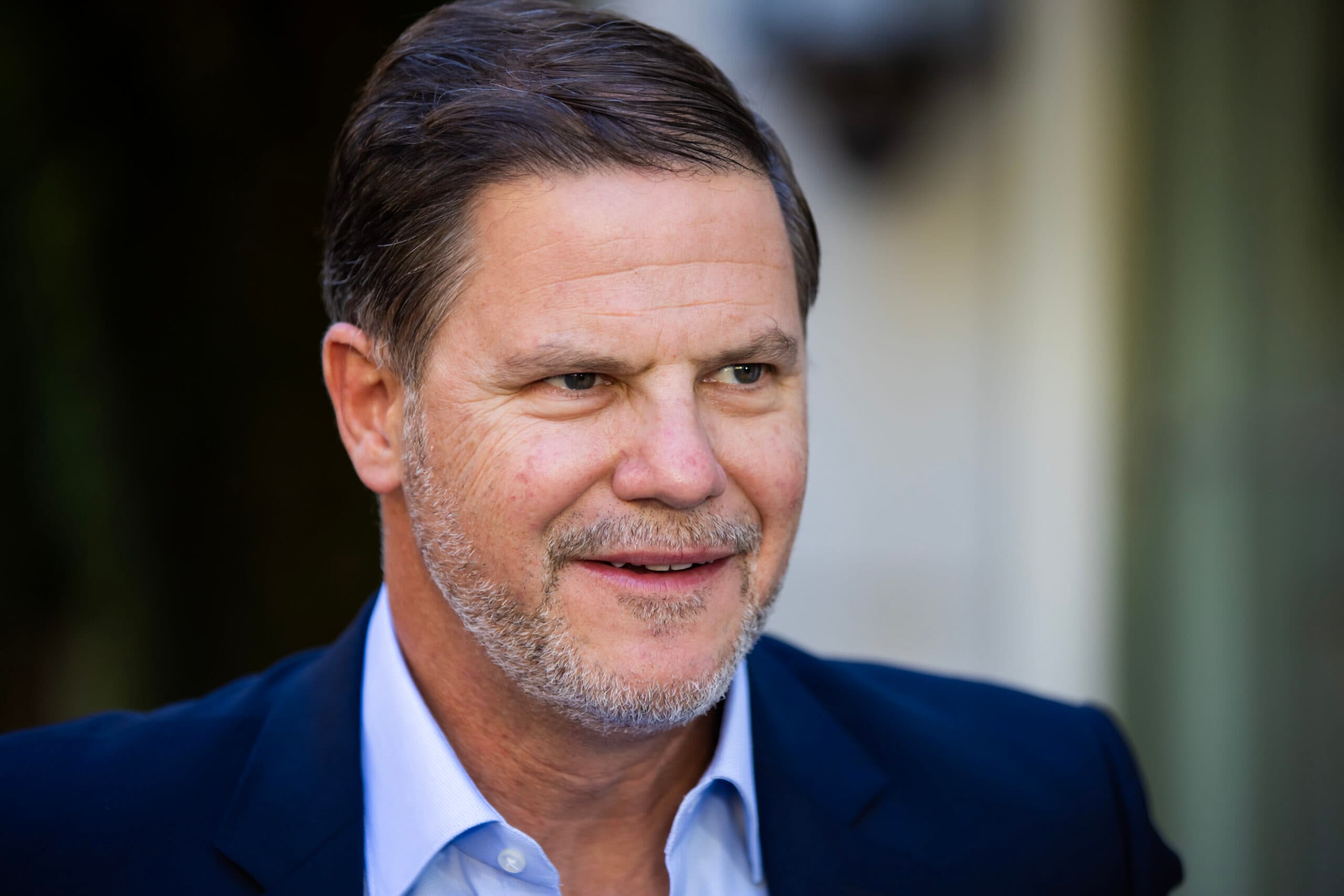
Photo credit: Mark J. Rebilas-USA TODAY Sports

Feb 8, 2026, 20:00 ESTUpdated: Feb 8, 2026, 12:28 EST
Four years ago, the Philadelphia Phillies lost to the Houston Astros in the World Series. The Phillies proved themselves to be one of the formidable contenders starting then and vowed to return to the World Series stage. And yet, that bid hasn’t worked out in the former National League Champions’ favour so far, as the team failed to make a deeper playoff push.
After losing to the Los Angeles Dodgers in the 2025 World Series, Toronto is on a similar path that the Phillies once faced in 2022.
Despite Philadelphia’s ambition, the team lost at the NLCS in 2023 and couldn’t make it past the NLDS in 2024 and 2025. For the Blue Jays not to follow in the Phillies’ footsteps, here are three lessons they should keep in mind as they plan their comeback.
Prevent the team’s position player core from aging out
The biggest issue that has plagued the Phillies has been the team’s older core players. When Philadelphia was rising to the top, the core of Nick Castellanos, Bryce Harper, JT Realmuto, Kyle Schwarber and Trea Turner became the team’s strength with their power-heavy approach.
This core was the reason behind the Phillies’ success in the 2022 season as key position players lived up to their expectations at the plate. Even after their loss in the World Series, the Phillies’ main contributors in the lineup barely changed over time. As a result, the team became increasingly reliant on star hitters to maintain their power output each year, regardless of their aging curve or potential injuries.
This approach ultimately left the Phillies vulnerable in the playoffs because their star players were unable to produce offensively in key moments. Castellanos, Harper, Schwarber and Turner all slumped towards the end of the NLCS in 2023, which gave a way for the Arizona Diamondbacks to punch back.
Although the Phillies couldn’t manage to reach the World Series stage for the past few years, the team’s front office continued to rely on its former all-stars, which began to show its age and limits as the team entered the 2024 and 2025 seasons. The 2025 season was particularly egregious as Harper, Schwarber and Turner recorded more strikeouts than hits in the NLDS against the Los Angeles Dodgers.
Philadelphia is running it back again for the 2026 season with a similar core of position players, which seems to be risky if the star players don’t manage to keep up with their expected performances again. The average age of the Phillies’ hitters was 30.3 for the 2025 season. There will be some young players like Justin Crawford coming up, but those little changes won’t change the fact that the team is very much dependent on their older star players.
The Blue Jays’ core is on the older side, but still has younger hitters like Addison Barger, Joey Loperfido, Vladimir Guerrero Jr., and Davis Schneider, who can contribute alongside veterans like Anthony Satander and George Springer. Toronto must find ways to maintain its offensive strength while identifying the right young players to bring up and trade for, if it would like to avoid the offensive predicament the Phillies are currently in.
Having a good bullpen matters
The Phillies have had a strong rotation featuring Jesús Luzardo, Aaron Nola, Cristopher Sanchez, Ranger Suárez and Zack Wheeler at different points of their seasons between 2022 and 2025. Unfortunately, the Phillies’ bullpen was an unpredictable whirlwind at best, which was one of the bigger reasons why the team struggled in the playoffs.
The 2023 Phillies’ bullpen, featuring Jose Alvarado, Seranthony Dominguez, Jeff Hoffman, Craig Kimbrel, Matt Strahm and Gregory Soto, was the least of its concerns; the team even ranked seventh in bullpen strength among all 30 teams. However, when Kimbrel struggled to suppress the Diamondbacks’ offence throughout the NLCS, Philadelphia eventually crumbled to Arizona.
During the 2024 playoffs, the Phillies had a deep bullpen with Hoffman, Strahm, Tanner Banks, Carlos Estévez, and Orion Kerkering, except that this core was responsible for 16 earned runs in 12 2/3 innings in the postseason. This was a hard pill to swallow for Philadelphia since its relievers maintained excellent results during the regular season. Unfortunately, the 2024 playoffs demonstrated relievers’ inherent volatility and the reason for adding and developing more effective relief pitching.
The 2025 Phillies bullpen also struggled in the NLDS, with Kerkering, Strahm, and David Robertson each having their own meltdowns. Jhoan Duran was the diamond of the bullpen, but didn’t secure any saves in that series.
The Phillies have added Jonathan Bowlan and Brad Keller as main relievers to the bullpen for the 2026 season, but whether their bullpen will rebound remains to be seen. What the Blue Jays can take notes from the Phillies is that having enough relievers won’t be enough.
Starting pitching matters, but a stronger bullpen can be a make-or-break for contenders. The Kansas City Royals could return to the World Series in 2015 after failing to win it all in 2014 because their bullpen was virtually unhittable. Toronto is currently reconfiguring its bullpen, starting with the addition of Tyler Rogers on a three-year, $37 million deal. The Blue Jays will have to either find good relievers in their system or through trades in the 2026 season if they are successful again.
Avoid building a monolithic roster
The Phillies’ larger roster construction strategy revolved around building a powerhouse team at all costs. This strategy was the driving force behind the team signing hitters like Kyle Schwarber and Trea Turner, which created a home-run-heavy but defensively exposed team. This flawed approach wasn’t detrimental at first when the team managed to reach the World Series stage with its powerful lineup.
Yet, this monolithic position player core began to show its cracks when the team got eliminated from the playoffs before reaching the World Series. As much as Philadelphia’s offence depended on selective aggression, à la Harper and Schwarber, it fell victim to its hyper-aggressive approach, which meant that the team’s lineup didn’t grind out many pitchers and that stood out during the 2024 playoffs when the Phillies faced the New York Mets in the NLCS.
The Phillies weren’t as potent if their star position players couldn’t be themselves. In the end, failing to create a diverse roster with versatile hitters was the weakness that held the team back. Unlike the Phillies, the Blue Jays’ roster relied on power and contact-based hitting, which paid off during the 2025 season as the team secured a spot in the World Series.
With Bo Bichette’s departure and the addition of Kazuma Okamoto, Toronto’s lineup will undergo some identity changes. From that point of view, the Blue Jays are already on a different trajectory than the Phillies are. But Toronto’s front office will have to continue diversifying its lineup to maximize its potential. The sea of sameness is what failed the Phillies – the Blue Jays can’t afford to go down the same route.
Breaking News
- Despite early injury, Alejandro Kirk remained a focal point of the Blue Jays’ success in 2026
- Blue Jays free agent target: Gleyber Torres
- Blue Jays’ Dylan Cease nominated for MLBPA’s outstanding pitcher award
- 5 Blue Jays named 2026 American League Gold Glove finalists
- Blue Jays: Yohendrick Piñango and three others set to play in Venezuelan Winter League