
Blue Jays sign Tyler Rogers to three-year deal bluejaysnation.com/news/toronto-b…

Blue Jays: An analytical overview of reliever Tyler Rogers
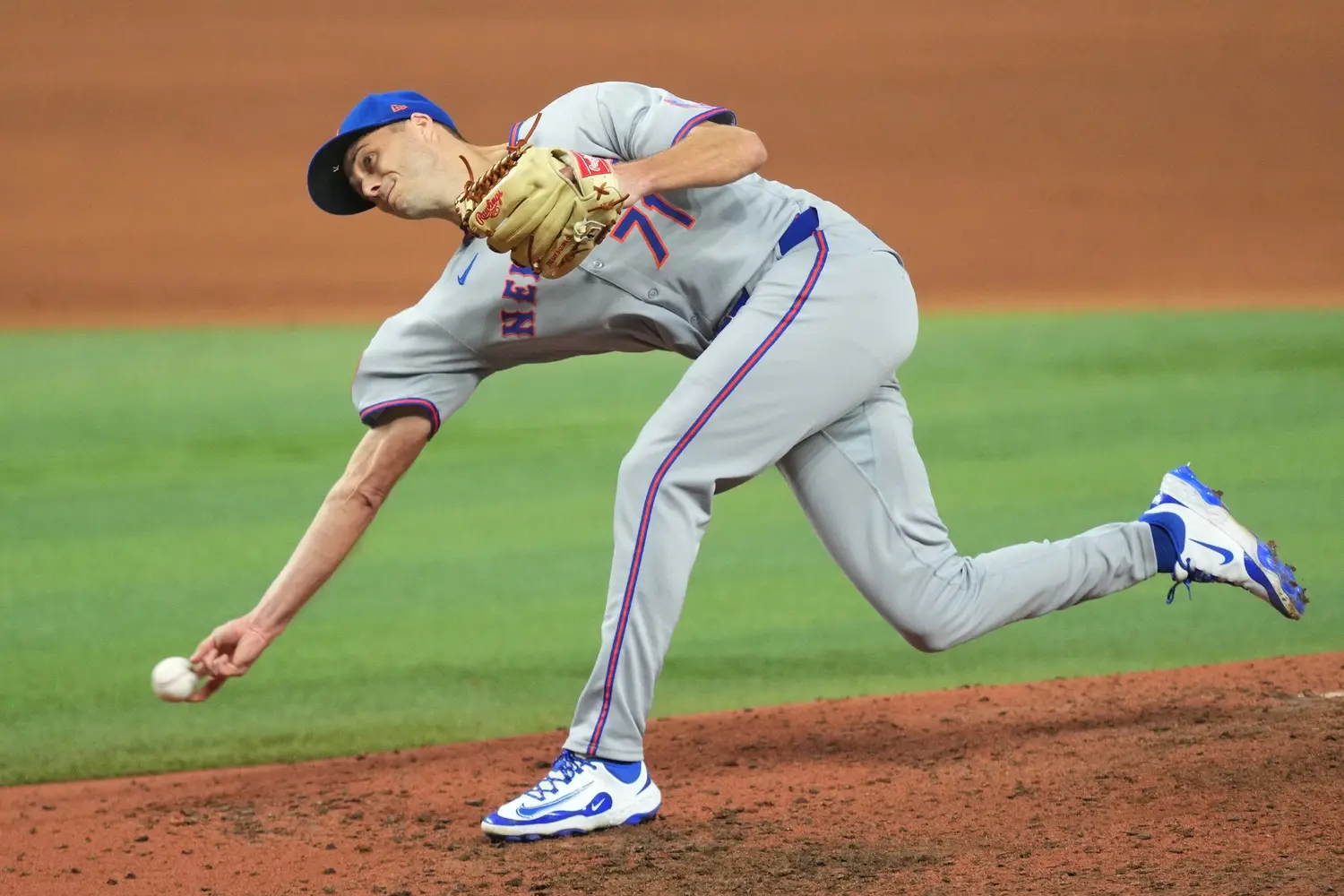
Photo credit: © Jim Rassol-Imagn Images

By Nick Prasad
Dec 15, 2025, 08:00 ESTUpdated: Dec 14, 2025, 18:36 EST
The Toronto Blue Jays added reinforcements to the bullpen by locking up right-handed reliever Tyler Rogers to a three-year deal. The club was seeking a high-leverage reliever, and Rogers appears to be that guy.
Seranthony Dominguez hit the free agent market after the 2025 season, leaving that unofficial bullpen position vacant. If the postseason and World Series taught the club anything, it was that a high-leverage reliever is crucial to the relief sequencing.
Rogers signed for three years at $37 million and carries a vesting option for a fourth season, so he is sticking around for quite some time. He split the 2025 season between the San Francisco Giants and the New York Mets, having spent the previous six years in the Bay Area.
Tyler Rogers Statistical Overview
Rogers is known for his usage throughout the season. He’s led the NL numerous times for appearances (2020, 2021, and 2024) and led the entire Major Leagues last season with his 81 outings.
Across both the Mets and Giants, Rogers worked 77 1/3 innings and allowed just 17 earned runs on 66 hits (7.7 H/9). He walked just seven hitters this past season (0.8 BB/9) while striking out 48 (5.6 K/9). The right-hander does not often allow hard and impactful contact; he allowed just four home runs in 2025 and ranked in the 99th percentile in average exit velocity (85.8 MPH) as well as the 100th percentile in walk percentage (2.3%) and barrel percentage (2.1%). The reliever has only allowed a maximum of seven home runs in any given season and is a groundball specialist, boasting a career 56.6% groundball rate.
Rogers is going to be a special piece out of the bullpen, specifically due to his arm action and release point. His arm action is extreme submarine style, with his knuckles almost scraping the mound dirt, bringing the release from the bottom. His frontal appearance when he’s separated on the mound resembles an eagle with wings sprawled; this allows for his arm path to travel low. Why is the release important to his profile? Nothing he throws comes near 90 mph.
Rogers has brought his pitch repertoire down to two options: a sinker and a slider. The sinker works up to 83.5 mph with 52.9 inches of vertical break, while the slider works to 74.1 mph with 38.9 inches of vertical drop and 10.9 inches on the horizontal side. His overall release point, in conjunction with pitch movement and velocity, causes unreadable circumstances for his opponents, hence the soft contact and high groundball numbers.
The recent pitcher comparisons have shown Rogers versus Trey Yesavage, who have opposite release points. Yesavage comes truly over the top, while Rogers is right under. Rogers will force weak unintentional swings and protective hacks, leading to weak results.
With the addition of Rogers, the Jays will need to designate someone for assignment or trade a player on the 40-man roster to clear space.
PRESENTED BY VIVID SEATS

Take $20 off your first Vivid Seats order of $200+ using promo code JAYSNATION (new
Breaking News
- NPB’s Hanshin Tigers agree to post Teruaki Satō
- Blue Jays: Assessing Vladimir Guerrero Jr.’s chances at winning his second Gold Glove
- Blue Jays free agent target: Trent Grisham
- Nathan Lukes provided the Blue Jays with quality play on both sides of the ball in 2026
- Blue Jays free agent target: Raisel Iglesias