It’s too early to give the 2025 Toronto Blue Jays an identity, but if we’re held to only the first 16 games, this team is anchored by the starting rotation. It smells a lot like the way their 2023 season unfolded; that team used only eight starting pitchers (one of those being a single end-of-season spot start for Wes Parsons), with the top four pitchers in starts and innings pitched all posting sub-4.00 ERAs.
This year’s rotation has shown early signs of repeating that level of success, although I’m sure they won’t argue with Toronto’s offense taking the reins at some point this season. Until that happens, though, this is the Blue Jays’ bread and butter.
Save for Max Scherzer, let’s look at how each starter has kicked off their season on the right foot.
José Berríos
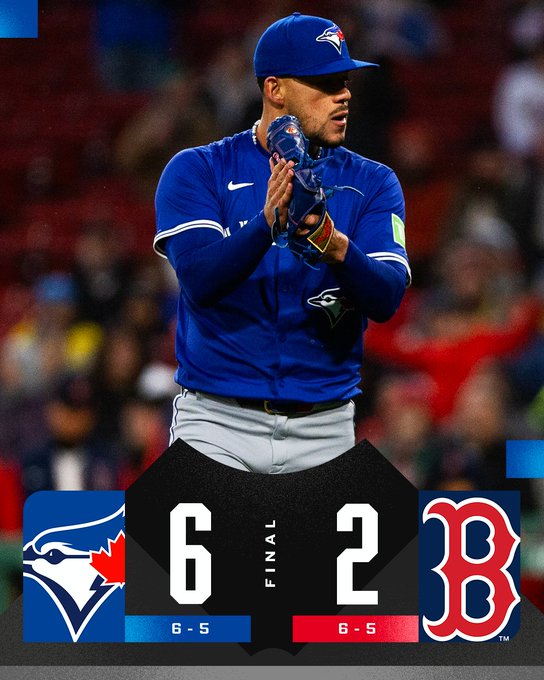
Berríos has bounced back nicely after a clunker of an Opening Day start against the Orioles. He faced just one batter over the minimum through his first five innings of work in his second start of the season against the Nationals, and he pitched seven gritty innings of one-run ball last Tuesday in rainy Boston.
One of the biggest factors in Berríos’s success is giving up the home run, especially after allowing the second-most homers a season ago. Correlation does not always equal causation, but he has not allowed a home run in his two best starts this season. The other two, both against the Orioles, have featured five home runs being hit off Berríos. To his credit, though, Berríos retired Adley Rutschman in all three at-bats that he had on Sunday. Rutschman entered that contest holding a career .600/.630/1.160 slash line and four home runs against Berríos for his career.
This sounds incredibly obvious, but Berríos limiting home runs can also come from pitch location and getting ahead in counts. Two of the three homers he gave up on Opening Day were with Berríos behind in the count, and the third homer was on the first pitch of an at-bat to Cedric Mullins in which Berríos’s four-seamer ended up middle-middle. On Sunday, Berríos hung a changeup that also ended up over the heart of the plate and led to a home run for Tyler O’Neill. He still worked to strike out six batters in his five innings of work, including one to Rutschman on a slurve below the zone.
Berríos is getting nice results from his changeup and slurve overall; entering Sunday, his changeup had generated a 52.4% whiff rate, and opposing hitters only registered a .158 slugging percentage against the slurve. He’s also successfully picked off two runners with second baseman Andrés Giménez, so fans can anticipate more of that tactfulness in his future starts.
Going forward, he’ll need to be able to establish both of his fastballs, though, as lacking effectiveness in those pitches was a large part of his 2022 woes and is why he currently leads the AL in hits against (24).
Kevin Gausman
If you’re in love with Gausman’s fastball-splitter duo that was incredibly effective during his first two seasons in Toronto, it may be time to pull some of your stock. His splitter generated a 43.2% whiff rate in 2023, dipped to 33.5% last year, and is only at 15.2% to start this season. But that doesn’t mean that Gausman hasn’t found ways to be successful.
After a healthy spring where Gausman said he felt a “
night and day” difference between this spring and last, he’s held a 2.33 ERA, 0.62 WHIP, and 4.2 H/9 through his first three starts this season. Entering Saturday, he also ranked 11th in all of baseball in first pitch strike percentage with a 72.1% clip.
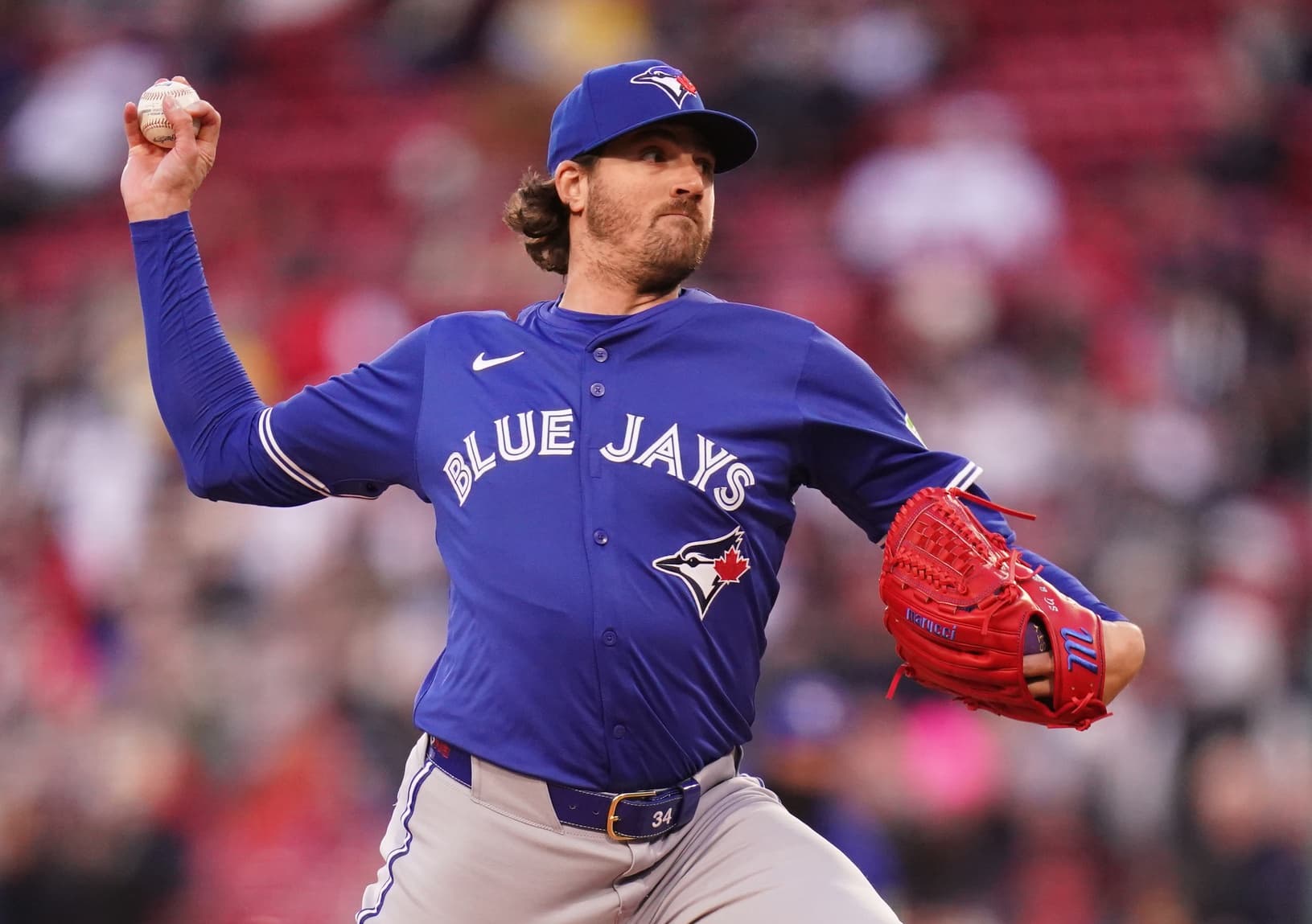
What’s becoming difficult to predict are Gausman’s strikeouts; he’s currently sitting at what would be a career-low 6.5 K/9, a number that has also declined since finishing third in Cy Young voting in 2023. Gausman failed to strike out a batter over 5 2/3 innings in his April 4th start against the Mets, but he posted 10 strikeouts over eight shutout innings last Wednesday against the Red Sox. In that start, all of those strikeouts were on his four-seam fastball, a pitch that averaged just 93 mph that night.
It’s not the prototypical way that Gausman has dominated games, but to his credit, he’s adapted to what batters are doing against him. The Red Sox, for instance, finished third in baseball in strikeouts last season with a largely similar offense to this season. Since the Red Sox couldn’t hit the fastball, and Gausman was locating the pitch effectively, what reason did he have to deviate from that plan?
The question now is how long Gausman can have outings like that where he’s relying heavily on one pitch.
Some teams will hit fastballs better than others, and that will put more pressure on the splitter and/or slider to be effective. Gausman doesn’t need the analytics department to let him know the numbers on his splitter; he can tell firsthand that hitters aren’t fooled. It’ll be interesting to see how his arsenal is implemented throughout this season, but with a healthier spring, this start to the season is encouraging for the 13-year veteran.
Chris Bassitt
Bassitt has been sensational to start his 2025 campaign, and if he had just a little bit of help on offense, the Blue Jays would be 3-0 in all three of his starts. While that has not been the case, Bassitt still enters Monday tied with Cincinnati’s Hunter Greene for the fifth-best ERA in baseball with a 0.98 mark.
It’s hard not to find a category in which Bassitt hasn’t excelled. Albeit early in the season, he’s sitting at what would be a career-best 10.3 K/9 and 1.5 BB/9. He has yet to allow a home run, and his 1.19 FIP entered Sunday as the best in the league.
Bassitt’s first start of the season against the Orioles may have been the most encouraging, considering Baltimore has had their share of success against him since he signed with the Blue Jays. Between ’23 and ’24, Bassitt has made four starts against the Orioles, allowing 30 hits, 19 earned runs, and six homers across 20 innings pitched. His lone start against Baltimore this season went much differently as he allowed just one earned run and seven strikeouts over six innings.
Bassitt’s second start of the season against the New York Mets seemed to simply be an extension of what he did to them in June of 2023. That year, Bassitt silenced them over 7 2/3 innings, allowing just four hits, no walks, no runs, and eight strikeouts. This season, Bassitt allowed just four hits, no runs, no walks, and nine strikeouts over 6 2/3 innings on April 5th in Queens.
Bowden Francis
The Rowdy Tellez trade is looking better and better as time goes on.
Francis has had a solid start to the season, but an unfortunate outing on Saturday against the Orioles has inflated his numbers a bit. He retired the first 14 of the first 15 batters he faced before allowing a two-run home run to Heston Kjerstad, and a fielding miscue from Vladimir Guerrero Jr. in the sixth inning led to two more earned runs on Francis’s dime.
In the two starts prior against the Nationals and Mets, Francis had allowed just eight hits and four earned runs with five walks and 10 K’s across 11 1/3 innings. Although it’s early, he’s getting great results from his splitter with eight strikeouts and a 44.4% whiff rate on the pitch.
Exemplified in his no-hit bids last season, Francis has made it routine to establish rhythms early in games and keep runners off the base paths, and he’s carried that over into this season. In his first start of the season against Washington, Francis didn’t allow a hit until the top of the sixth inning when he allowed back-to-back solo homers. He retired 16 of the first 18 batters he faced, with the two non-outs being walks, and that run also included retiring nine straight hitters.
For the first time in his career, Francis is entering a full season with a clear role as a starter. Putting all of the uncertainty in the rearview mirror may turn out to be a huge help for him.
Easton Lucas
If the Blue Jays are going to have a winning season and compete in the American League East, they are going to need pleasant surprises like what they are getting from Lucas right now. Following Scherzer being relegated to the IL with a thumb injury, Lucas was called up from triple-A Buffalo, but there was still some speculation as far as his role. Would he start games, or would he tag-team a start with Yariel Rodríguez?
The Blue Jays elected to go with the former, and it’s paying off right now. He’s made two starts to this point, allowing only four hits, three walks, and zero runs over 10.1 innings. He’s won both of his starts, and even for those who don’t look at pitcher wins as a legitimate stat, it’s worth noting that he’s been opposed by notable southpaws in MacKenzie Gore and Garrett Crochet.
Blue Jays manager John Schneider has praised Lucas’s athleticism and delivery, and he even
compared that delivery to that of longtime lefty pitcher Cole Hamels.
Much like the rest of the rotation, Lucas won’t blow you away with velocity. He’s averaged only 92.9 on his four-seamer, but that didn’t stop him from getting four Red Sox hitters to strike out swinging with that pitch last week. He also had three other strikeouts by way of his slider, a pitch that pairs nicely with his changeup in that both pitches are around the same velocity, but obviously feature different movements.
Lucas has kept traffic off of the base paths, facing only one hitter while having more than one baserunner on in his two starts. Furthermore, between Alex Bregman, Jarren Duran, Rafael Devers, CJ Abrams, and James Wood – arguably the most talented hitters he has gone up against – that group went a combined 1-for-11 with a walk against Lucas.
The more Lucas pitches this season, the more film he’s giving the other 29 teams. For a pitcher with 28.2 career innings, his performance will be tested throughout the ebbs and flows of an MLB season. Nonetheless, if it isn’t broken, don’t fix anything; he’s been more than Toronto could have asked for.
Presented by Betway