
VLADIMIR GUERRERO JR. HITS HIS FIRST HOMER OF THE SEASON AT ROGERS CENTRE ‼️

How the Toronto Blue Jays should approach free agency this offseason
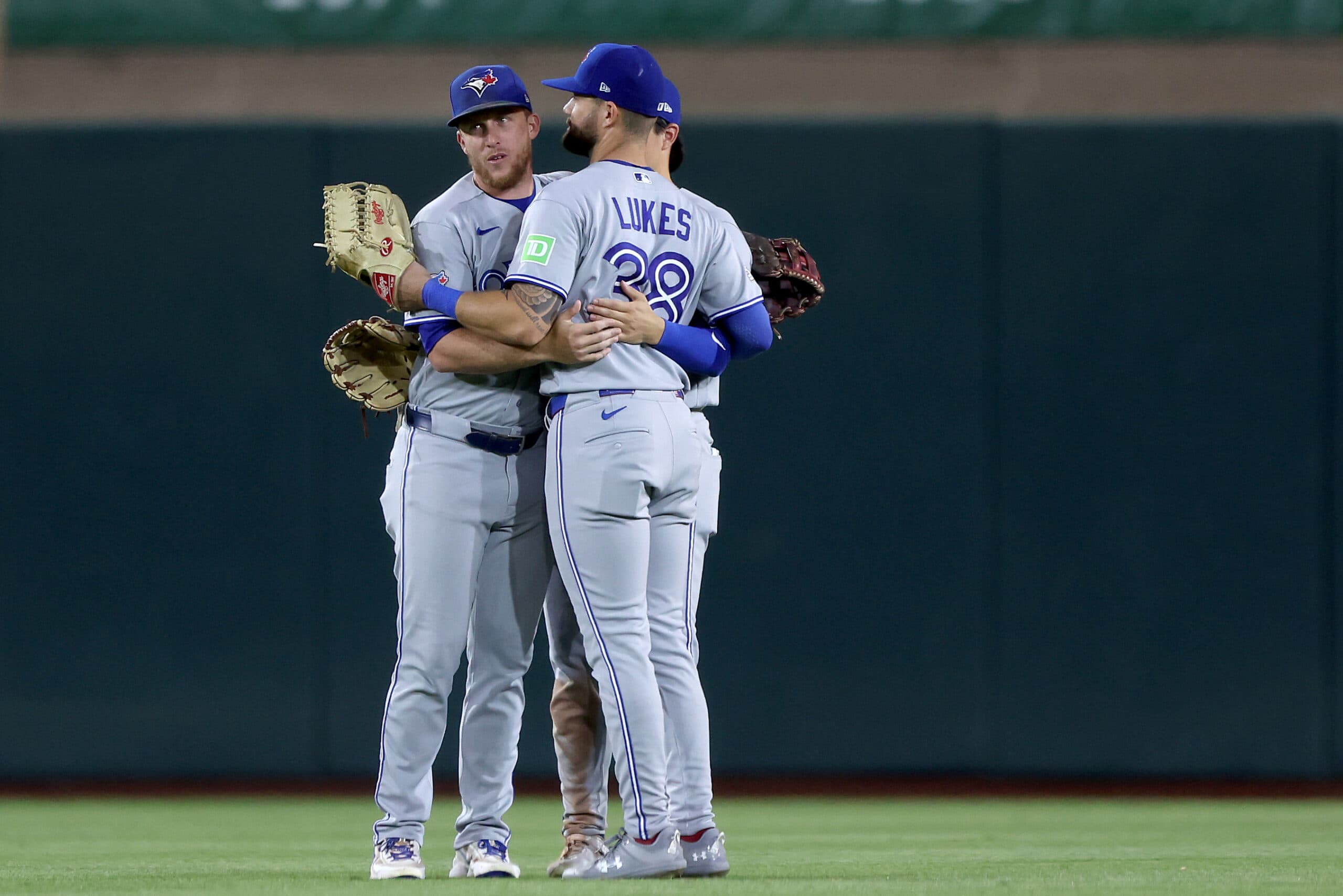
Photo credit: Dennis Lee-Imagn Images

Oct 5, 2026, 07:00 EDTUpdated: Oct 5, 2026, 16:28 EDT
A World Series Game 7 appearance in 2025 for the Toronto Blue Jays gave way to a 79-83 finish in 2026, last place in the American League East. Toronto ranked last in the majors with 152 home runs and 648 runs scored, and general manager Ross Atkins said at the Sept. 30 end-of-season press conference that the lineup never found momentum, never put the ball in the seats and did not get on base nearly enough. Atkins and President and CEO Mark Shapiro both said at their end-of-season press conference that the next addition has to be impactful.
The Money
Toronto’s 2026 cash payroll has been reported by the Canadian Press and MLB Trade Rumours at roughly $275 million, and by FanGraphs at $284 million. By a Yahoo Sports estimate, about $102 million comes off the books from expiring contracts and trades, a list that includes George Springer, Kevin Gausman, Jameson Taillon, Shane Bieber and Max Scherzer. That leaves a 2027 cash payroll of about $218 million before any additions or arbitration increases, and roughly $65 million of room to return to 2026 spending levels.
Beating the Deadline
The collective bargaining agreement (CBA) between MLB owners and the players’ association expires at 11:59 p.m. ET on December 1, and a lockout is widely expected. Free agents who want certainty before a work stoppage have only the weeks between the World Series and that deadline, so the market will move fast, much as it did when Toronto landed Dylan Cease early in the 2025-26 offseason.
The 2021-22 lockout lasted 99 days, from Dec. 2 to March 10, and produced a rush of signings before the freeze and a compressed scramble after it. Signing before Dec. 1 at least locks in terms that everyone understands. Waiting for the post-lockout landscape is a bet that the best players will still be available, and the top names in this class are unlikely to wait, given the uncertainty future payroll restrictions could have.
Offence, Offence, and more Offence
Run prevention held up for Toronto in 2026, ninth in ERA, 10th in runs against. However, the offence never really broke through. Vladimir Guerrero Jr. is the clearest example. In the first season of his $500 million extension, he hit .260/.332/.356 with nine home runs and a 94 wRC+, a career-low slugging percentage by 77 points. He hit one home run in 73 games at Rogers Centre.
Atkins pointed to a loss of rhythm and timing early in the year that eroded Guerrero Jr.’s confidence, but there’s more to it. The Toronto lineup in 2026 truly lacked a hitter who could force pitchers to throw Guerrero strikes. That is the hole to fill: not another glove-first infielder, not another platoon left-handed outfielder, a true impact bat.
The Targets
- OF Seiya Suzuki (Age: 32): Hit .270 with 26 home runs, 86 RBI and an .841 OPS in 143 games for the Cubs, with a 12.8 percent walk rate and strong defensive grades (14 DRS, 5 OAA). He has hit 20 or more home runs in four straight seasons. The Athletic’s Mitch Bannon reported on Sept. 28 that Toronto is expected to pursue him.
- 2B Brandon Lowe (Age: 32): Hit .260/.331/.493 with 35 home runs and 96 RBI for the Pirates. His defence swung from -14 DRS and -14 OAA in 2025 to +13 DRS and +15. OAA in 2026.
- LHP Adrián Morejón (Age: 27): Posted a 2.75 ERA over 168 appearances for the Padres since the start of 2024. Consensus top 10 free agent in this class, and he is expected to be the top reliever available.
- RHP Shane Bieber (Age 31): Posted a 4.37 ERA with a 1.42 WHIP in 11 starts for Toronto in 2026 after returning from injury. He is worth considering on a prove-it, team-friendly deal for the final rotation spot.
The Plan
Four signings cover the four clearest needs. Seiya Suzuki takes right field, and the cleanup spot behind Guerrero Jr. Brandon Lowe solves the second base platoon situation and adds left-handed power. Adrián Morejón gives Tyler Rogers a left-handed partner at the back of the bullpen, creating one of the most lethal back-ends in MLB. Bieber fills the last rotation spot on a one-year deal in an ideal world. If Toronto landed all four, it would rank among the best offseasons (if not the best) in franchise history.

Seiya Suzuki during his 5 yr / $85M CHC deal: 16.2 rWAR, 675 G, 113 HR, 128 OPS+, 142 2B.
Now comes the massive price tag. Suzuki could command a nine-figure deal worth more than $25 million AAV, and Lowe could command a similar number. Moreover, Morejón has a case to approach or beat Tanner Scott’s four-year, $72 million deal, nearing $18 million AAV. Put that together, and the cost tops at least $68 million but could balloon to $79 million or more, especially if you tack on another starter.
Toronto has about $65 million on paper to spend, roughly $52 million after arbitration raises, and about $62 million if it non-tenders Clement and Lukes. So landing all four means pushing 2027 cash payroll to roughly $300 million to $310 million, potentially pushing Toronto into the fourth Luxury Tax Threshold, an exclusive group that includes only the Los Angeles Dodgers and New York Mets in 2026.
Unless Rogers Communications wants a +60% tax surcharge on the Blue Jays, something will have to give, but there’s a pretty clear order of operations in that scenario. The two bats come first, since the offence is such a glaring problem. Morejón comes next, since Atkins said the back of the bullpen needs reinforcing after Jeff Hoffman was traded. The starter comes last, because Spencer Miles and Spencer Arrighetti are already in-house.
Final Thoughts
The front office does not need to overhaul this roster. The core is still in place, the pitching staff is in admirable shape, and the organization has already shown a willingness to spend aggressively in prior offseasons when it believes a player can truly move the needle.
A salary cap, if one comes, would complicate every version of this proposed plan for Toronto, which is another reason to move before the CBA expires. However, the bottom line is that the front office has plenty of room to act, and Toronto should be a big player in the free-agent market. The harder question is whether it spends that room on the right things before a potential lockout closes the league’s doors for an indefinite period on December 1.
Sponsored by bet365