
As off-season planning begins, exposure to Japanese market remains area of interest for Blue Jays
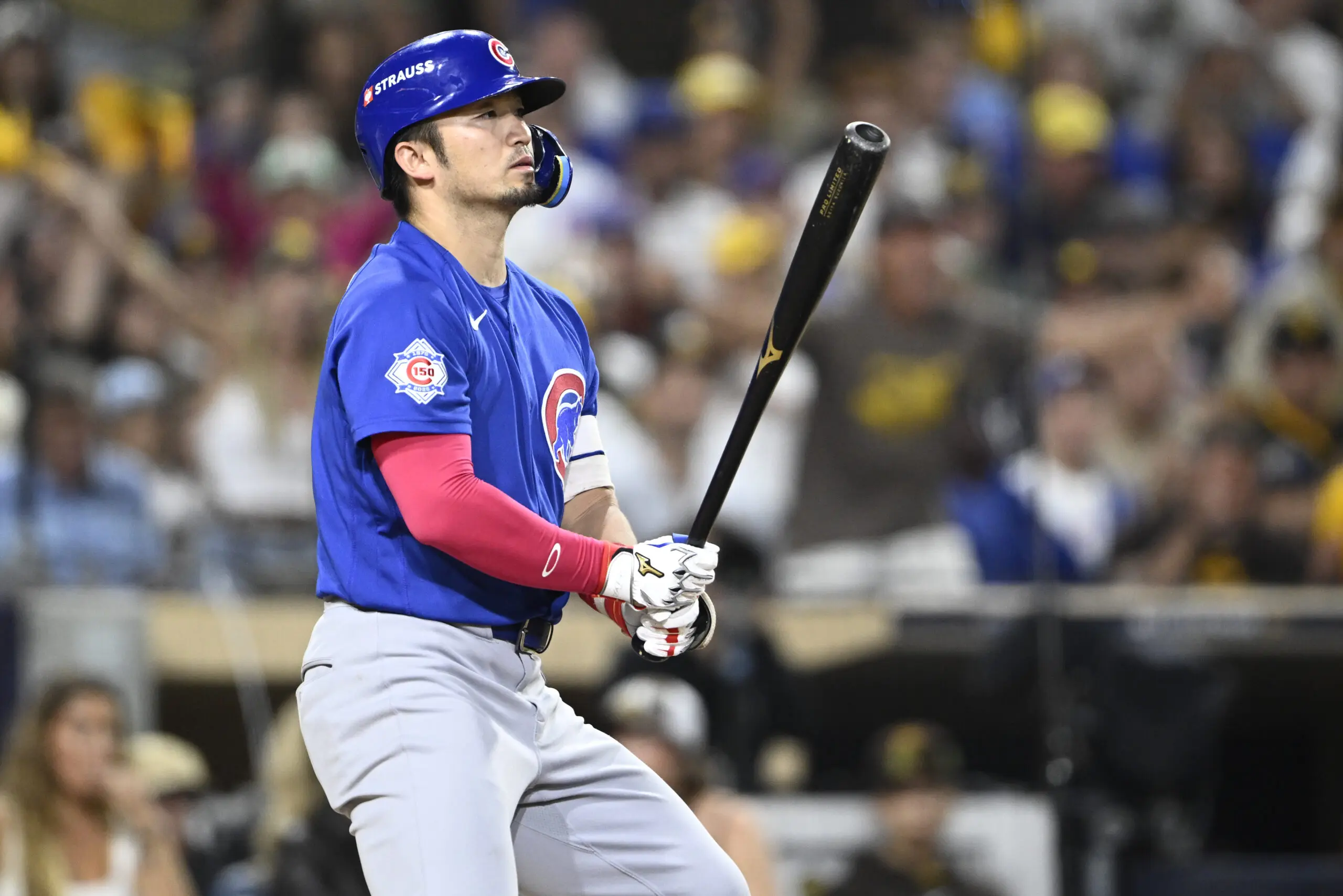
Photo credit: Denis Poroy-Imagn Images

By Thomas Hall
Oct 2, 2026, 14:30 EDTUpdated: Oct 2, 2026, 14:34 EDT
TORONTO — After years of dipping their toes into the Pacific Rim market, and a successful first season for Japanese slugger Kazuma Okamoto with the Blue Jays, the organization appears committed to further exploring growth opportunities in that part of the world this winter.
Based on the crop of free agents set to hit the market next month, there are multiple scenarios where signing Okamoto — who led the team with 33 home runs and 92 RBIs as a rookie this past season — to a four-year, $60 million free-agent contract last off-season could prove to be the appetizer of a much larger dish for this franchise. They may not be finished spending in that part of the market.
Perhaps Okamoto was just the first wave of Japanese stars to arrive in Toronto.
With holes to fill in the middle of the Blue Jays’ lineup and at the back end of the rotation, names such as Seiya Suzuki in traditional free agency, as well as Teruaki Sato, Kaima Taira and Hiromi Itoh through MLB’s posting system with NPB, will be of particular interest to this front office when the market officially opens.
While that certainly won’t be the only avenue management explores, it’ll certainly occupy much of their focus in the coming weeks and months. During Wednesday’s end-of-season media availabilities, team president and CEO Mark Shapiro highlighted its potential for expanded growth, saying, “it’s one outlet for talent that I know Ross [Atkins] is going to fully explore.”
Landing a superstar like Okamoto, whose popularity in Japan is among the largest in the sport, given his history playing for the Yomiuri Giants — NPB’s most popular franchise — before arriving in North America in 2026, has meant diving headfirst into the Pacific Rim market like never before. The Blue Jays’ brass has tasted it before, albeit in microdoses, during the tenures of Hyun Jin Ryu, Yusei Kikuchi and even Shun Yamaguchi.
Now they’re hoping to consume a much larger piece of the pie.
“We’re certainly looking to leverage that from a business perspective,” Shapiro said on the impact of the Japanese market. “Our understanding coming in [to this year] was it’s not a one-year process; it takes multiple years, so we’re going to have a contingency going over to Japan this off-season. I might make a trip as well following that up.“We hope to have that be a part of our business strategy as well moving forward.”
In terms of quantifiables, Year 1 of Okamoto’s arrival meant a significant increase in social media engagement and audience for the Blue Jays. Transforming the 30-year-old’s newfound love for quesadillas into the “Kaz-Adilla” sensation for purchase at the Rogers Centre definitely helped in that regard.
It’s still too early to feel the entire weight typically associated with rostering a marquee Japanese star. As popular as Okamoto is back home, his following can’t compare to the massive size of someone like Shohei Ohtani’s — few things can, honestly. In time, however, the franchise expects the value of that relationship to grow in the coming years, both on and off the field.
There are also lessons from Okamoto’s rookie campaign that can likely be applied to the next Japanese player the Blue Jays acquire. At the end of the day, every player is different. But there can be some overlap, especially for those transitioning from NPB to MLB.
“Some of the challenges with Japanese [players] the difference in the travel, the difference in the way the schedule works with a day off,” Shapiro said. “I think we tend to overlook some of the challenges that exist in transition, which gives me hope that Kaz is going to be even better next year.”
Okamoto, for example, never played 150 games in a single calendar year before this season; he finished with a career-high 156 games played in ’26. That wasn’t necessarily by design, of course. The Blue Jays entered this year hoping that Addison Barger — capped at just 28 plate appearances after injuring both ankles while running to first base and blowing out his right elbow on the hardest throw of his career (101.2 m.p.h.) — would alleviate some of that workload at third.
Instead, after Barger underwent season-ending elbow surgery, which the club is confident he’ll be “pretty close” to 100 per cent recovered should spring training begin on time in 2027, Okamoto morphed into Toronto’s everyday guy at the hot corner. Next season, though, they’d like to offer him a day off when a tough right-hander starts.
As it pertains to pursuing future Pacific Rim free agents, the organization intends to lean on the strengths it established with Okamoto and his camp during the past eight-plus months.
“Talent is talent, but I think when you put talent together with a process and a plan, hopefully you can look at it and say that we have a pretty good plan and people in place to help with that,” manager John Schneider said.
Along those lines, adding another Japanese position player this off-season — their second in as many winters — figures to be a strong possibility for Toronto’s front office. There’ll be other hitters of interest, too, Randy Arozarena and Brandon Lowe the most notable free-agent bats among them. However, the pair of Suzuki and Sato pose the ability to check market-related boxes, which could set them apart.
Between those two, Suzuki likely presents the better fit for the Blue Jays. Despite being five years older, the 32-year-old slugger — who posted 26 home runs, 86 RBIs, a .270/.368/.473 slash line and a 134 wRC+ (100 league average) in 143 games with the Cubs this past season — has spent each of those last five years adapting to the sport’s North American style and schedule. As such, he’ll possess much higher odds of outperforming Sato’s rookie-year production in ’27, which, given the immense urgency for the club’s offence to take a significant leap next season, may offer him a leg up.
As a right-handed-hitting corner outfielder, it’d also likely be much easier to fit Suzuki into a puzzle already stocked with lefty-hitting outfielders as opposed to the uncertainty surrounding Sato’s future position — he’s mostly played third in Japan but also split time in both corner outfield spots.
Suzuki’s defence is another appealing trait that’ll draw interest from the Blue Jays’ front office. He’s coming off a career year in the field, having registered 14 defensive runs saved, five outs above average and a plus-eight fielding run value (placing in the 86th percentile of the majors) across 972.2 innings in right field. He made excellent strides, evolving from, at times, a DH-only participant, setting himself up to cash in on that development this winter.
There’s a strong case to be made that Suzuki’s next payday should come from Toronto, which is hunting for a core middle-of-the-order bat like his, with upside that wouldn’t be limited to within the white lines.
PRESENTED BY THE PERFECT 9 COLLECTION

Some baseball traditions never get old. The Perfect 9 Collection is our newest limited-edition collaboration with Blue Jays Today, inspired by the viral 9/9/9 challenge that has become a staple of baseball culture. Whether you’re taking on the challenge or just enjoying a day at the ballpark, this collection celebrates the moments that make baseball unforgettable. Featuring premium Levelwear apparel with elevated fabrics and modern fits, it’s designed for fans who live and breathe the game—on game day and beyond. Limited edition. Premium quality. Built for baseball fans. Shop the Perfect 9 Collection while it lasts. Exclusively at nationgear.ca
Recent articles from Thomas Hall
Breaking News
- Ernie Clement’s 2026 season was a tale of two halves
- Blue Jays free agent target: Adrian Morejon
- Louis Varland named to The Sporting News American League All-Star Team
- Report: Former Blue Jay Riley Adams signs minor-league deal with Boston Red Sox
- Addison Barger’s injury-plagued season left a hole in the Blue Jays’ lineup in 2026