
Blue Jays: Examining Yohendrick Piñango’s rise to prominence
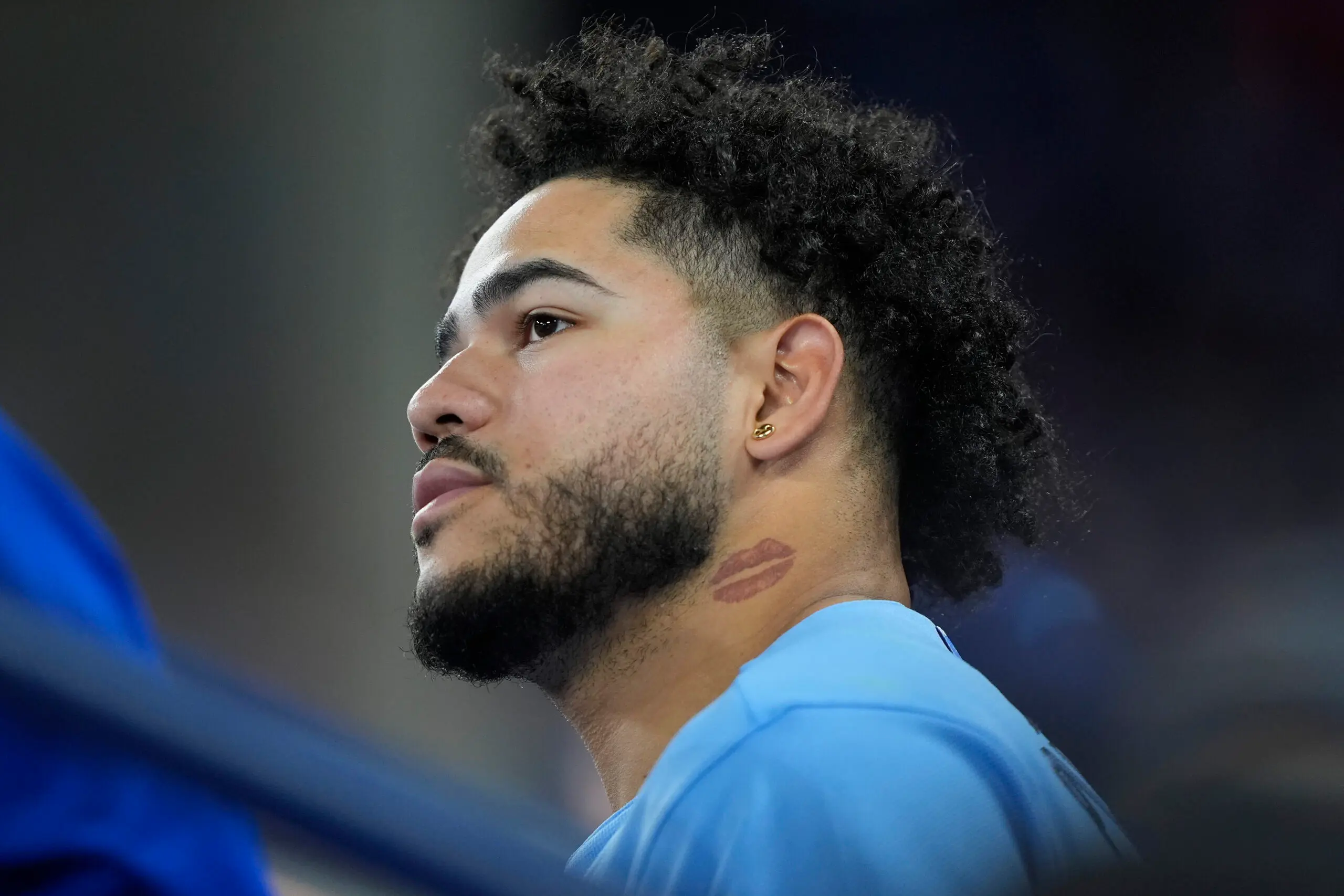
Photo credit: © John E. Sokolowski-Imagn Images

Jun 3, 2026, 16:00 EDTUpdated: Jun 3, 2026, 16:06 EDT
At the outset of the Toronto Blue Jays’ 2026 season, the prospect of Yohendrick Piñango — the team’s No. 10 ranked prospect — leading the team in wRC+ more than a third of the way through the season would’ve seemed loopy.
Yet, that’s where the Blue Jays find themselves. It’s been both a terrific start in the majors for the young slugger and an abysmal run at the plate for the team as a whole.
Piñango’s 122 wRC+ ranks sixth among rookies with at least 90 plate appearances — behind only Sal Stewart, Kevin McGonigle, Samuel Basallo, Travis Bazzana and Munetaka Murakami. Toronto’s 94 wRC+ ranks 24th among all teams. Still, in a vacuum, it’s promising to see a young hitter get his first taste of the big leagues and succeed. Let’s look at how he’s achieved these results and what it could mean for Piñango’s career outlook going forward.
To start, while his walk rate is below average at 5.3 %, Piñango’s separated himself from the rest of the Blue Jays’ lineup by making superb swing decisions when the rest of the position player corps has been on a wild goose chase — their 36.7% chase rate is second in MLB.
He’s still chased a little more than average, but rarely at pitches he can’t handle, running a solid 25% whiff rate that’s in line with his prior numbers in the minors. Watching his plate appearances only further confirms his discerning approach.
It’s a small thing, but Pinango taking that first borderline strike (it got challenged and overturned) is something the Blue Jays haven’t done well this season. They’ve swung too often at iffy pitches early and gone 0-for-1 rather than 1-and-0, the opposite of their credo. Even though he lost count leverage, he went on to get a pitch he could handle and drove it for a run-scoring single.
Then watch how he takes three straight pitches just off the edge before adjusting to a breaking ball and punching it into the outfield.
Again, demonstrating his measured approach, Piñango comes up in a big spot as the tying run in the bottom of the seventh, takes another pair of pitches off the edge, and puts a good swing on a hittable cutter.
Last look at how he hangs in against one of the best pitchers in the game, taking and fouling off tough pitches before getting the barrel to a low changeup.
His poise and decision making in the box would be impressive for any player, let alone a 24-year-old rookie.
When it comes to executing these timely swings, Piñango is deceptively deadly. Standing at a diminutive 5’10 and listed at only 170 pounds, he doesn’t have the appearance of your typical big bopper. But his 75.8 m.p.h. average bat speed is second on the team to Vladimir Guerrero Jr. His average exit velocity is, well, above average, and his exit velocity numbers in the minors were enormous.
An 115.4 m.p.h. max that ranked in the 98th percentile and is fourth on the Blue Jays behind only George Springer, Addison Barger and Guerrero Jr. There’s thunder in that bat. And while it hasn’t reared its head in a major way in the big leagues yet, Piñango’s sound process and these underlying metrics suggest there may still be more juice to be squeezed out of the rookie.
He was initially striking out and chasing less than he did in the minors, which has begun to correct, understandably so given the increased quality of stuff he’s facing. Still his walk rate is well below the 11-14% he ran over his last three MiLB seasons, and considering the quality of his plate appearances, it’s also fair to expect him to walk more often and for his already strong .340 OBP to climb.
All this to say, Piñango is a guy. He might not be a star, but he has an interesting profile that should produce at least slightly above average offence — which is a requirement for him to be viable at the MLB level when also factoring in his shaky outfield defence.
On that note, even though he’s been Toronto’s most productive hitter on a per-game basis, there’s a good chance he could see the minors again this season. Addison Barger is set to return soon, and the Blue Jays will need to open up a roster spot.
The team has an abundance of left-handed hitting outfielders (Piñango, Barger, Daulton Varsho, Jesús Sanchez, Nathan Lukes). Of the four, only Barger, Lukes, and Piñango have options, and it’s hard to imagine the Blue Jays optioning either of the former, who were integral parts of their World Series roster last season.
It wouldn’t be the end of the world. Losing a currently productive bat isn’t ideal for Toronto’s struggling offence. But getting Barger back would be more important. Piñango could stay ready with Buffalo and still contribute down the road. But there is also a scenario where he forces the Blue Jays’ hand. His current performance and profile are undoubtedly making the decision hard already, and if he remains one of the team’s top hitters in the coming days, the corresponding move for Barger could be more unexpected.
Breaking News
- Addison Barger’s injury-plagued season left a hole in the Blue Jays’ lineup in 2026
- Blue Jays free agent target: Robbie Ray
- Jake Bloss continues strong showing in Arizona Fall League with six strikeout performance
- Blue Jays listed as one of six destinations for Tarik Skubal by MLB.com
- Blue Jays Arizona Fall League check-in: Aaron Parker has found success in limited playing time