
Accepting or declining Myles Straw’s team option is one of many decisions the Blue Jays must make this off-season
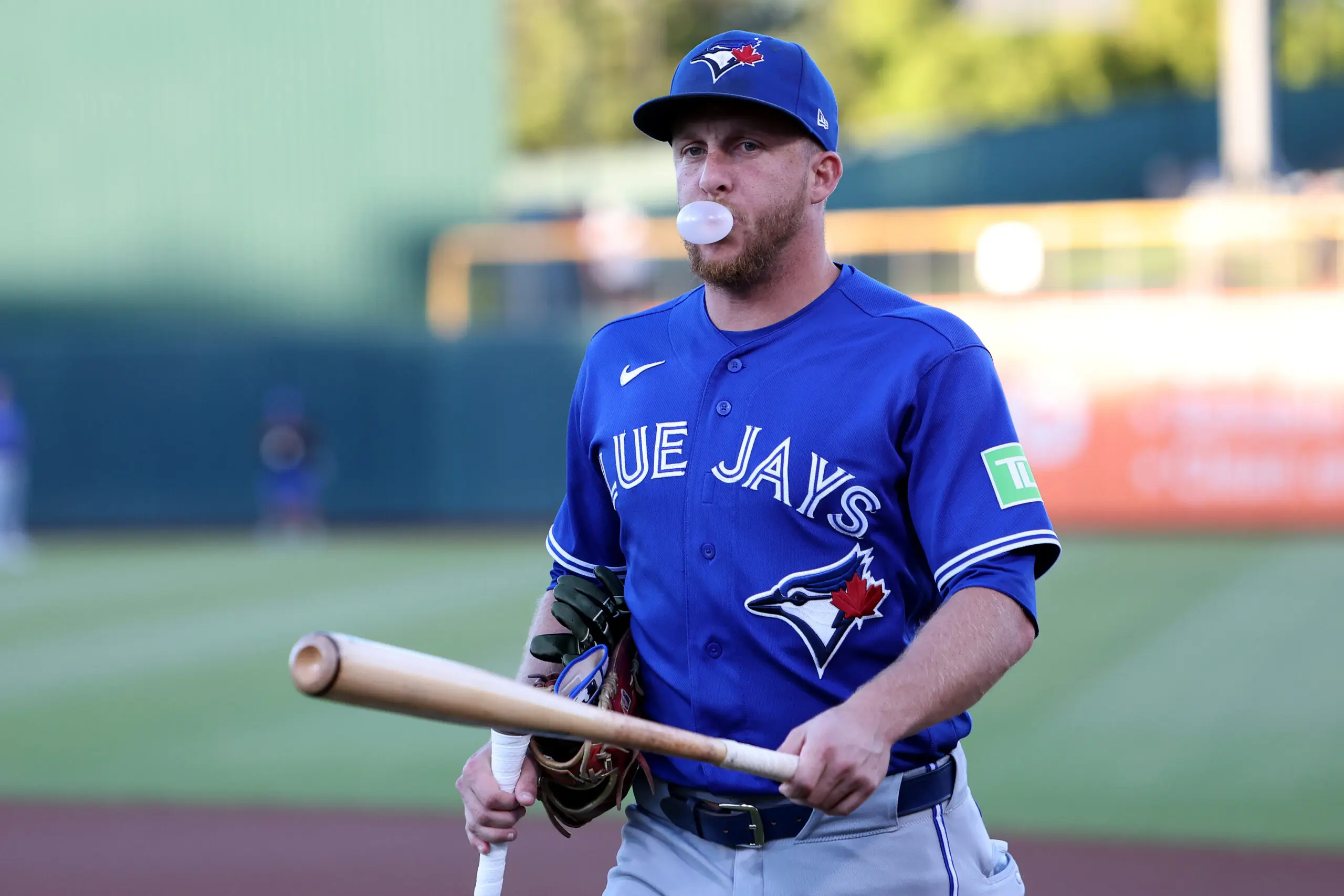
Photo credit: © Dennis Lee-Imagn Images

Sep 29, 2026, 16:00 EDTUpdated: Sep 29, 2026, 16:53 EDT
The Toronto Blue Jays’ season wrapped up on Sunday, and in a month’s time, the 2026-27 off-season will officially begin five days after the newest World Series champion is crowned.
It’ll be an action-packed off-season. If the MLBPA and MLB don’t come to an agreement on a new Collective Bargaining Agreement by December 1st, the league will enter its second lockout in the 2020s. Last lockout was a wild one, expect much of the same here as this off-season will be a wonky one.
But one thing that won’t change is the deadline for player options. By 5:00 PM ET five days after the conclusion of the World Series, the Blue Jays will have to make a decision about Myles Straw, as has an $8 million club option. The good news for the Blue Jays is that they won’t have to pay the $1.75 million buyout if they elect to decline the option.
But the question is, should the Blue Jays bring back Straw?
Should the Jays bring back Straw?
Long-story short, they definitely shouldn’t with the contract he’d be on if they activate the team option. A big sticking point of the ongoing CBA negotiations is a salary cap. Adding $8 million to that on a fifth outfielder without knowing whether it’ll be implemented isn’t an ideal situation, as it can handcuff that for future moves.
It doesn’t even mention the type of player Straw is. The outfielder will give solid at-bats and avoid striking out, but he has limited pop in his bat and has a career 80 wRC+. Paired with strong defence and quick feet, Straw is your prototypical fifth outfielder, but not a player you’d ideally give $8 million over the course of a season.
The 2025 season was one of his best, matching a career-high with four home runs, and doing it in 337-fewer plate appearances as well. That was still only good enough for a 91 wRC+, though he offered Gold Glove calibre defence in the outfield. The same cannot be said for his 2026.
This past season, the 31-year-old slashed just .241/.304/.342 with three home runs for an 83 wRC+. Following the Daulton Varsho trade, Straw found himself playing more often where he actually found a bit of success with the bat, slashing .272/.341/.384 in 140 plate appearances, with 12 of the 19 doubles he hit in 2026, good for a 106 wRC+.
However, Straw’s defence dipped in the outfield. In 2025, Straw accumulated 18 Defensive Runs Saved, 9 Outs Above Average, and 8 Fielding Run Value in 698.1 innings across the three outfield spots. In 760.2 innings this season, Straw finished with 2 DRS, 5 OAA, and 3 FRV. For a fifth outfielder, this is a big concern.
So quite simply, the Blue Jays should decline his team option. That doesn’t stop them from bringing him back on a lesser deal, something that does have some merit.
Before the end of the 2025 season, former Blue Jay Bo Bichette spoke with the media and noted that Ernie Clement and Straw were big reasons for the closeness of the 2025 team.
Despite all his struggles at the plate and dip in his defensive ability, Straw is a leader in the locker room, and the Blue Jays have lost a whole lot of locker room leaders since their heart breaking Game 7 loss. That alone, is a good argument to bring Straw back as the fifth outfielder, at least at a lower price point.
One counter-argument to that is: does a player who is a leader, but with a weak bat and declining defence, warrant a roster spot over a player who can provide more offensively? This really is the deciding factor.
To me, no one in the system is quite ready to offer more on the field while also providing the same value in the locker room. They should bring back Straw on a short-term, low-payroll deal until someone emerges to take his spot.
Cynthia Ryley Delaney is a Nation Network writer for Blue Jays Nation, DFOEdmonton, and DFOCalgary. She can be followed on Twitter @CynthiaRDelaney.
Breaking News
- Nathan Lukes provided the Blue Jays with quality play on both sides of the ball in 2026
- Blue Jays free agent target: Raisel Iglesias
- Blue Jays: Vancouver Canadians named High-A team of the year
- Blue Jays free agent target: Daulton Varsho
- Blue Jays: Assessing Brandon Valenzuela’s chances at winning the Gold Glove